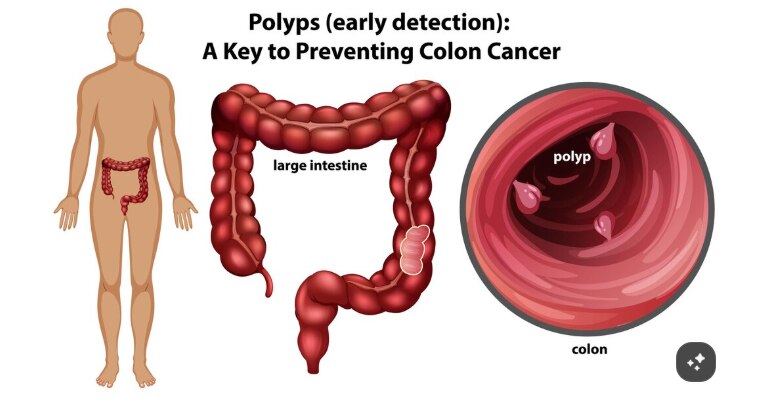
Treatment is usually worth considering when a rectal polyp could cause bleeding, contain precancerous changes or hide a deeper problem, but the right procedure depends on its size, appearance, location and pathology. By the end, you will know which warning signs need assessment, how doctors choose between endoscopic removal and surgery, what costs to question and how follow-up affects the decision.
Key takeaways
- Bright-red bleeding does not prove you have piles.
- The polyp’s size, location and pathology guide treatment choice.
- Ask when pathology results are due and whether surveillance is needed.
- Compare total cost, follow-up care and specialist experience—not just the procedure fee.
Could your bleeding be a rectal polyp—and how is it found?
Many rectal polyps cause no symptoms and are found during screening or an examination for another problem. Rectal bleeding, blood mixed with stool, mucus, a changed bowel habit, tenesmus (the persistent urge to empty your bowel), iron-deficiency anaemia or unexplained weight loss needs medical review. Bright-red blood alone does not prove piles.
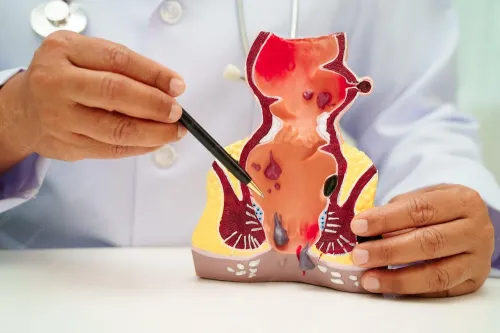
Doctors assess whether the finding fits another condition:
- Piles commonly cause bright-red bleeding or a lump; an anal fissure causes sharp pain during and after passing stool.
- A skin tag is an external fold of skin and does not explain blood mixed through stool.
- Rectal prolapse involves tissue bulging through the anus, often with mucus or incomplete evacuation.
- A polyp may be smooth, fragile or out of reach on an external inspection, so symptoms cannot confirm or exclude it.
Testing proceeds according to the finding. A stool test can detect hidden blood but cannot locate or remove a polyp. Digital rectal examination and proctoscopy assess the anal canal and lower rectum; flexible sigmoidoscopy examines more of the left colon.
Colonoscopy examines the entire colon after bowel preparation, because synchronous lesions can exist elsewhere and poor preparation weakens a reassuring result. Imaging is reserved for selected findings, such as suspected invasion or complications, not used routinely instead of endoscopy.
If you are comparing rectal polyp treatment in Mumbai, ask which examination is planned and whether a removed lesion will undergo histopathology.
Which treatment is proportionate to your polyp?
The proportionate treatment is the least invasive option that removes the lesion completely and gives a pathologist enough tissue to judge it. A small, mobile polyp that can be snared in one piece during colonoscopy usually needs endoscopic polypectomy, not abdominal surgery.
| Option | What it means | When it applies |
|---|---|---|
| Endoscopic polypectomy | Snare removal, either in one piece or by piecemeal endoscopic mucosal resection (EMR) | Small lesions suit one-piece removal; larger, broad-based lesions may need piecemeal EMR |
| Endoscopic submucosal dissection | Careful dissection beneath the lesion to remove selected large or high-risk lesions in one piece | Considered when precise margin assessment matters and expertise is available |
| Transanal excision | Removal through the anus using surgical instruments | Useful for suitable rectal lesions, especially when access, size or shape makes endoscopy unsuitable |
| Wider colorectal operation | Removal of part or all of the affected rectum, sometimes with lymph-node surgery | Required when invasion, fixation or cancer risk cannot be safely managed locally |
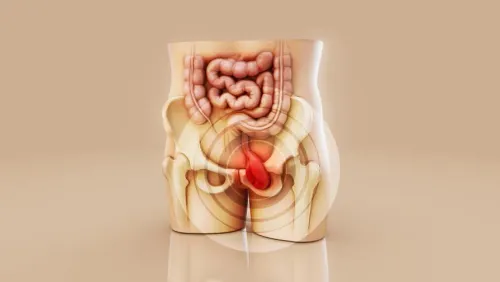
Rectal anatomy changes the decision. Doctors assess distance from the anal verge, size, shape, circumferential involvement and fixation, then estimate whether the lesion has invaded the rectal wall. Suspected cancer may require pelvic MRI, CT of the chest and abdomen, or endorectal ultrasound before treatment.
Laser or other energy treatment is not a universal substitute for excision. Destroying tissue can prevent assessment of polyp type, dysplasia, margins and invasive cancer. For rectal polyp surgery in Mumbai, ask whether the proposed method will provide a specimen for histopathology, not just remove visible tissue.
What will removal and recovery actually involve?
Endoscopic polypectomy usually involves bowel preparation, fasting and consent on the day of treatment. A flexible colonoscope reaches the rectum under sedation or anaesthesia; a wire snare then cuts off the polyp, and the specimen is retrieved for pathology. The doctor may place clips across the removal site to reduce bleeding.
Small, straightforward lesions are often suitable for day care, with discharge after observation. Admission or overnight monitoring is more likely after a large or piecemeal removal, transanal excision, significant bleeding, difficult access, major medical conditions or general anaesthesia.
Rectal polyp surgery in Mumbai may therefore involve a hospital stay even when the operation itself is short.
Expect bloating, rectal discomfort and altered bowel movements for a few days. Small amounts of bleeding can occur, particularly after bowel movements.
After transanal surgery, follow the wound-care instructions, keep the area clean, avoid straining and take prescribed pain relief; time away from work ranges from a day or two after simple endoscopy to longer after surgery.
Before treatment, give the doctor a complete medicine list. Do not stop warfarin, apixaban, rivaroxaban, aspirin or clopidogrel without a written plan covering the last dose and restart time.
Seek urgent medical advice for:
- Heavy bleeding, clots or bleeding that starts again after settling
- Severe or worsening abdominal pain, fever or faintness
- A swollen abdomen or inability to pass stool or gas
How do pathology and surveillance show whether treatment was enough?
The procedure name does not decide whether treatment was enough; the pathology report does. Ask for the polyp type, measured size, adenomatous or serrated features, dysplasia grade, villous architecture, high-grade dysplasia, and any invasive carcinoma. When the lesion was removed in one piece, ask whether the margins are clear.
- One or two tubular adenomas under 10 mm: surveillance in 7–10 years.
- Three or four tubular adenomas under 10 mm: surveillance in 3–5 years.
- An adenoma at least 10 mm, with villous or tubulovillous features, or with high-grade dysplasia: surveillance in 3 years.
These 2020 U.S. Multi-Society Task Force examples assume complete removal and a high-quality examination. Your interval changes if bowel preparation was inadequate, the whole colon was not examined, or removal was piecemeal. A piecemeal specimen makes margin assessment less reliable and often leads to an earlier site-check colonoscopy.
A superficial biopsy can show benign tissue while missing deeper high-grade dysplasia or invasive cancer, especially in a large, ulcerated or difficult-to-sample lesion. Final excision pathology therefore matters more than a reassuring small biopsy. Removing one rectal polyp also does not prevent new polyps elsewhere, so surveillance examines the colon for synchronous or future lesions.
Rectal polyp treatment in Mumbai should be judged by this documented evidence, not by the word “laser”: destroying tissue without a pathologist-assessable specimen can leave the key diagnosis uncertain.
How should you judge value, cost and specialist choice in Mumbai?
Treatment is worth the money when removal provides a specimen for histopathology and prevents a precancerous or suspicious lesion from being ignored. Leaving it unassessed can mean delayed diagnosis, repeat procedures, or a more extensive cancer operation later; a rectal polyp is not automatically cancer, but waiting does not establish that it is safe.
A practical rectal polyp treatment cost in Mumbai budget is:
| Option | Rough private-sector range | What can change the total |
|---|---|---|
| Diagnostic colonoscopy | Low five-figure rupees | Sedation, anaesthesia, hospital and multiple findings |
| Colonoscopic polypectomy | ₹15,000–₹60,000 | Size, number, piecemeal removal, clips and pathology |
| Transanal or hospital-based surgery | From roughly ₹75,000 upward | Anaesthesia, admission, complexity, imaging and cancer planning |
Ask for an itemised written estimate covering:
- Consultation and bowel preparation
- Colonoscopy, sedation or anaesthesia
- Removal technique and possible clips
- Histopathology
- Admission or overnight observation
- Follow-up consultation
Choose a rectal polyp specialist in Mumbai by asking who personally performs therapeutic colonoscopy or transanal surgery, who reviews the histopathology, and whether colorectal, gastrointestinal pathology, radiology and oncology support are available if cancer is found.
Dr Manish Dhuris Advanced Laser Surgery can be compared with other providers using these questions; the word laser alone does not prove that a provider can manage an invasive rectal lesion.
Related service
RECTAL POLYP SURGERY ₹1200 *What are Rectal Polyps?* Rectal polyps are growths on the inner lining of the rectum, which is part of the large intestine. View service → |
Frequently asked questions
How is a rectal polyp found?
A clinician may find it during a rectal examination, proctoscopy, sigmoidoscopy or colonoscopy. Bleeding, mucus, tenesmus, changed bowel habits, anaemia or weight loss requires medical review.
Does every rectal polyp need surgery?
No. Treatment depends on the polyp’s size, shape, number, location and appearance. A suitable small polyp may be removed endoscopically, while a larger, broad-based or difficult-to-reach lesion may require a more involved procedure.
What does rectal polyp removal and recovery involve?
Removal may involve an outpatient endoscopic procedure or surgery under anaesthesia. Ask about bowel preparation, pain control, bleeding precautions, activity limits, time away from work and the symptoms that require urgent review.
Why is pathology important after removal?
Pathology identifies the polyp type, checks for dysplasia or cancer, and confirms whether the removed tissue has clear margins when relevant. The report helps determine whether further treatment or surveillance is needed.
How should you compare rectal polyp treatment costs in Mumbai?
Request an itemised estimate covering consultation, tests, anaesthesia, facility fees, pathology, medicines, follow-up and treatment of complications. Compare the complete care plan rather than the procedure fee alone.
Keywords