A rectal lump or tissue that comes through the anus can be rectal prolapse, prolapsing haemorrhoids, mucosal prolapse or another pelvic-floor problem. You will learn how doctors identify the cause, decide whether surgery is needed, compare operation types and plan recovery safely.
Key takeaways
- Seek urgent care if prolapsed tissue stays outside, turns dark, or causes severe pain.
- Expect a physical examination and tests matched to your symptoms and bowel function.
- Treatment ranges from bowel management to abdominal or perineal rectal prolapse operations.
- Plan for changed bowel habits, wound care and scheduled follow-up after surgery.
What rectal prolapse looks like and when it needs urgent care
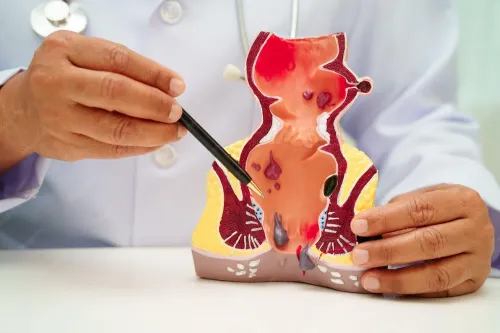
An adult full-thickness rectal prolapse appears as a rounded mass protruding through the anus, often during straining, that may return inside or remain outside. It can cause mucus, bleeding, incomplete evacuation, constipation, faecal leakage or difficulty controlling gas. Partial prolapse involves only part of the rectal wall; complete prolapse involves its full thickness.
| Condition | What you may see or feel | Distinguishing clue |
|---|---|---|
| Full-thickness rectal prolapse | Circular, concentric folds around the protruding tissue | The entire rectal wall telescopes outward |
| Prolapsing haemorrhoids | Separate lumps or columns with radial grooves | Haemorrhoid treatment does not correct full-thickness prolapse |
| Mucosal prolapse | A smaller segment of lining protrudes | Only the inner mucosa is outside |
| Rectal intussusception or rectocele | Pressure, blockage or incomplete emptying without obvious external tissue | Intussusception folds inward; a rectocele bulges into the vagina |
Seek immediate medical assessment if the prolapse:
- Cannot be gently returned, or suddenly becomes irreducible
- Causes severe pain or turns dark purple, blue or black
- Produces heavy bleeding, fever or vomiting
- Prevents you from passing stool or gas
Do not repeatedly force a painful or discoloured prolapse back yourself. Arrange prompt assessment for any new protruding tissue; accurate diagnosis is essential before choosing rectal prolapse treatment in Mumbai.
What happens during the first consultation and which tests may be needed
A rectal prolapse specialist in Mumbai starts by taking a symptom history: when tissue appears, whether it returns on its own, straining, constipation, incomplete emptying, mucus, bleeding, leakage of stool and difficulty controlling gas. Previous childbirth, pelvic surgery and longstanding constipation also matter.
The examination includes the abdomen, inspection while you strain and a digital rectal examination. The surgeon assesses sphincter tone, pelvic-floor movement and whether the prolapse is full-thickness, mucosal or haemorrhoidal.
| Finding | Typical examination clue | Why it matters |
|---|---|---|
| Full-thickness rectal prolapse | Circular, concentric folds of protruding tissue | Requires prolapse-specific treatment |
| Mucosal prolapse | A partial layer of rectal lining protrudes | Treatment differs from full-thickness prolapse |
| Prolapsing haemorrhoids | Separate columns with radial grooves | Haemorrhoid treatment will not correct full-thickness prolapse |
| Rectocele or internal prolapse | Bulging or telescoping found during examination or imaging | May explain obstructed emptying without visible external prolapse |
If the prolapse does not appear during the appointment, take a clear photograph, if safe and appropriate, or ask about defecography. This X-ray or MRI-based test can show internal prolapse, rectocele and obstructed defecation. Anorectal manometry may help assess pressure and sphincter function when continence symptoms need clarification.
Colonoscopy is recommended when bleeding, anaemia, a changed bowel habit, screening needs or suspected polyps or masses justify it. Ask which operation is proposed, whether mesh is planned, and how recurrence, constipation, incontinence, infection and anaesthetic risks apply to you.
How doctors choose between bowel management and different operations
Non-surgical care is suitable for constipation, straining or mild symptoms, but it does not permanently repair an established full-thickness prolapse. The decision changes with the prolapse type, your fitness, age, previous pelvic surgery, bowel function and continence.
| Option | What it involves | When it may apply |
|---|---|---|
| Bowel management | Fibre suited to your bowel pattern, fluids, stool-softening medicine and avoiding prolonged straining | Mucosal prolapse, mild symptoms, or preparation before surgery |
| Abdominal rectopexy | Open, laparoscopic or robotic fixation of the rectum inside the pelvis; mesh may or may not be used | Medically fit patients with full-thickness prolapse, especially when durability is prioritised |
| Delorme operation | Removing the prolapsed lining and shortening the underlying muscle through the anus | Shorter or smaller prolapse, including selected older or higher-risk patients |
| Altemeier operation | Removing the prolapsed rectum through the perineum | Longer prolapse or patients for whom abdominal surgery carries substantial physiological risk |
| Another procedure | Treatment directed at haemorrhoids, mucosal prolapse, rectocele or a different diagnosis | When the protruding tissue is not full-thickness rectal prolapse |
A surgeon must also account for slow transit constipation, obstructed evacuation and faecal leakage; rectopexy can improve prolapse while worsening constipation in some patients. Perineal surgery may reduce anaesthetic and wound demands but carries different recurrence and bowel-function trade-offs. Every operation can recur.
For rectal prolapse surgery in Mumbai, ask exactly which procedure is proposed, whether mesh is planned, and the surgeon’s own recurrence and complication figures.
Dr Manish Dhuris Advanced Laser Surgery should clarify these points during discussion of a rectal prolapse operation in Mumbai; laser treatment for piles is not a standard substitute for correcting full-thickness prolapse.
Related service
Surgery ₹1200 Sacral fixation of posterior Rectal wall it is one of the best therapy recommended for Partial or complete Rectal Prolaps. View service → |
How to prepare for rectal prolapse surgery
Your operation plan determines the preparation: abdominal rectopexy, a perineal procedure and combined bowel surgery do not all require the same bowel cleansing. Before rectal prolapse surgery in Mumbai, ask which operation is planned, whether bowel preparation is required, and when you must stop eating and drinking.
- Bring every medicine, supplement and allergy record. The team reviews anticoagulants such as warfarin, apixaban or rivaroxaban, antiplatelet drugs such as aspirin or clopidogrel, diabetes medicines and blood-pressure tablets. Do not stop any prescription without written instructions; the plan may involve pausing, replacing or continuing a drug.
- Expect blood tests, including a full blood count to detect anaemia, plus kidney function, electrolytes, blood glucose and clotting tests when indicated. Your team may also check heart or lung fitness with an ECG, chest assessment or other tests based on your age and medical history.
- The anaesthetist reviews previous anaesthetic reactions, sleep apnoea, breathing problems, heart disease, fasting instructions and pain-control options. Tell them about loose teeth, allergies and all supplements.
- Follow the hospital’s exact bowel-preparation instructions. These may include a low-residue diet, a prescribed laxative and clear fluids, but some operations need little or no cleansing. Report vomiting, dehydration or failure to open your bowels before surgery.
What recovery, bowel changes and follow-up are like
Expect several weeks before normal activity after surgery. Minimally invasive abdominal surgery often permits faster recovery than open surgery, while a perineal operation may be less physically demanding. Follow the operating team’s limits for lifting, work, exercise and driving; walking is encouraged, but strenuous effort can disrupt healing.
Temporary bowel changes are common. Prevent hard stools and straining with prescribed laxatives or stool softeners, adequate fluids and fibre when advised; excess fibre without enough fluid can worsen bloating or obstruction. Leakage or urgency may improve as healing progresses, but persistent or new faecal incontinence needs review, particularly if it existed before surgery.
At follow-up, ask about recurrence, healing, bowel function and continence. No operation guarantees zero recurrence; risk varies by procedure and follow-up. Before choosing rectal prolapse treatment in Mumbai, clarify the approach, mesh use and the surgeon’s recurrence and complication rates.
For a rectal prolapse operation in Mumbai, laser surgery is not a substitute for full-thickness repair.
Frequently asked questions
What does rectal prolapse look like, and when is it urgent?
Full-thickness rectal prolapse appears as a rounded mass protruding through the anus. Seek urgent care if it remains outside, becomes dark or severely painful, or cannot be gently reduced.
What happens during a rectal prolapse consultation?
The doctor reviews symptoms, constipation, leakage and previous treatment, then examines the anus and rectum. Tests may include defecography, colonoscopy, anorectal manometry or imaging when symptoms require them.
How do doctors choose rectal prolapse treatment?
They consider prolapse severity, age, health, constipation, incontinence, previous operations and surgical risk. Options range from bowel-management measures to abdominal or perineal operations.
How should you prepare for rectal prolapse surgery?
Follow the clinic’s instructions about medicines, fasting, bowel preparation, transport and time away from work. Tell the surgical team about blood thinners, diabetes and other medical conditions.
What is recovery like after rectal prolapse surgery?
Recovery depends on the operation and your health. Follow wound-care and activity instructions, prevent straining, monitor bowel changes and attend follow-up appointments.
Keywords