A lump through the anus can indicate full-thickness rectal prolapse, internal intussusception, mucosal prolapse or prolapsing haemorrhoids, and each problem calls for a different response. By the end, you will know which symptoms need assessment, when non-surgical care is reasonable, how surgeons choose an operation, and what to verify before committing to treatment in Mumbai.
Key takeaways
- Confirm prolapse before treatment; haemorrhoids can look similar but need different care.
- Ask which operation suits your age, health, prolapse severity and bowel symptoms.
- Compare recurrence risk, constipation relief, hospital stay and recovery time—not just the surgical technique.
- Check the surgeon’s colorectal experience, diagnosis process, follow-up plan and emergency access.
Is the protruding tissue really rectal prolapse?
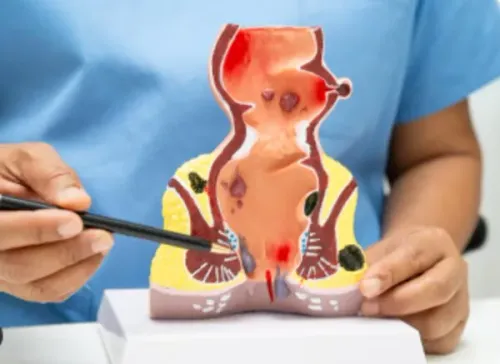
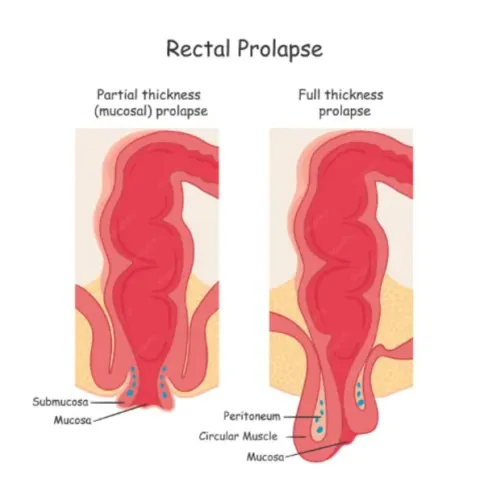
A mass coming through the anus is not automatically rectal prolapse. Full-thickness external prolapse often appears as a rounded, red mass with concentric circular folds; prolapsing haemorrhoids more often form separate columns divided by radial grooves. A clinician must confirm the diagnosis before selecting rectal prolapse treatment options.
Rectal prolapse can be internal, where the rectum folds inward without appearing outside; partial external, where only part protrudes; or complete external, where the full thickness remains outside. Mucosal prolapse affects only the inner lining and may need different treatment. Do not assume an operation designed for haemorrhoids or mucosal prolapse will correct full-thickness prolapse.
Arrange medical assessment if you notice:
- A mass that appears during straining, walking or a bowel movement, especially if it needs manual replacement
- Mucus, bleeding, soreness or a sensation of pressure
- Incomplete emptying, persistent constipation or repeated straining
- Faecal leakage, urgency or difficulty controlling bowel movements
- Severe pain, heavy bleeding, darkening tissue, fever or a prolapse that will not go back inside
Fibre, adequate fluids, stool-softening treatment, pelvic-floor physiotherapy and avoiding straining can reduce symptoms while you await assessment. They do not usually return a full-thickness prolapse permanently; confirmation of the anatomy is essential before deciding whether surgery is worth considering.
When are bowel changes enough, and when is surgery worth considering?
Conservative care can be enough when the problem is limited and there is no persistent full-thickness bulge. It aims to prevent worsening and make evacuation easier, not to rebuild stretched supporting tissues.
- Add fibre gradually and drink enough fluid; a sudden increase can worsen bloating.
- Use a clinician-recommended stool softener when hard stools or straining drive symptoms.
- Follow pelvic-floor physiotherapy and a timed, unhurried toilet routine; do not sit and push for long periods.
If the entire rectal wall repeatedly comes outside the anus, these measures may reduce constipation, leakage and discomfort but will not permanently return it to position. Full-thickness external prolapse generally calls for repair if you are fit for anaesthesia, symptoms limit daily life, or the prolapse is becoming harder to reduce.
Delay can lead to ulceration, bleeding and an irreducible prolapse.
“is rectal prolapse surgery worth it in Mumbai” cannot be answered by a price quote or a laser claim. Ask the colorectal surgeon to identify the anatomy—full-thickness external prolapse versus internal intussusception or mucosal prolapse—and explain why the proposed repair fits it. Confirm the surgeon’s registration and the hospital’s anaesthesia, emergency and follow-up arrangements.
If laser is proposed, ask which structure it treats; laser ablation is not an established replacement for reconstructive or perineal repair of full-thickness prolapse.
Which rectal prolapse operation fits your health and symptoms?
The operation depends on whether the rectum is fully protruding, partly descending, or folding inside, plus your age, frailty, anaesthetic risk, constipation, continence, previous operations and pelvic-floor or sexual concerns. Rectal prolapse treatment options are not interchangeable.
| Option | What it means | When it applies |
|---|---|---|
| Abdominal rectopexy | The rectum is lifted and fixed inside the pelvis using sutures, with or without reinforcing material. | Fit patients who can tolerate abdominal surgery and need durable support. |
| Ventral mesh rectopexy | The front of the rectum is supported with a mesh, avoiding extensive dissection behind it. | Internal or external prolapse with constipation or pelvic-organ prolapse, after discussing mesh risks. |
| Resection rectopexy | The surgeon removes a redundant sigmoid colon, then fixes the rectum. | Prolapse combined with severe constipation or a long, slow-transit sigmoid. |
| Delorme’s procedure | The inner lining is removed through the anus and the muscular wall is tightened. | Smaller external prolapse, particularly when abdominal surgery carries greater risk. |
| Altemeier’s procedure | The prolapsed rectum and sigmoid are removed through the anus, followed by reconnection. | Longer full-thickness prolapse or patients needing a perineal, lower-impact approach. |
| Internal-prolapse surgery | A targeted transanal or abdominal repair corrects intussusception inside the rectum. | Confirmed internal prolapse causing obstructed evacuation; treatment differs from external prolapse. |
Before choosing rectal prolapse surgery in Mumbai, ask for the named operation and the surgeon’s own recurrence and complication rates. Laser ablation is not an established replacement for rectopexy or perineal repair of full-thickness prolapse; ask exactly which anatomical problem it treats.
What should you check before choosing rectal prolapse treatment in Mumbai?
A worthwhile decision starts with a confirmed diagnosis and a written plan, not an advertised package price. Ask whether you have full-thickness external prolapse, internal intussusception or mucosal prolapse; an operation for haemorrhoids or mucosal prolapse does not automatically repair external prolapse.
| Check | Ask for | Why it matters |
|---|---|---|
| Operation | The named procedure, its purpose, and alternatives | “Rectal prolapse surgery” covers different repairs with different recovery and recurrence risks |
| Surgeon | Registration details, experience with that operation, personal recurrence and complication rates | Published success rates are meaningless when procedures or follow-up periods differ |
| Hospital | The hospital name, colorectal support, emergency treatment and follow-up arrangements | You need a clear route for bleeding, infection, urinary retention or recurrence |
| Anaesthesia | Who will provide it, the planned technique, and how your other illnesses affect risk | Anaesthesia planning changes with heart, lung, diabetes and medication histories |
| Total cost | A written estimate separating surgeon, hospital, operating room, anaesthesia, tests, medicines, mesh or stapling device, admission and follow-up | A low headline price can exclude the largest charges |
Ask how the plan addresses constipation, urgency or faecal incontinence, rather than treating the bulge alone. If a clinic proposes laser, including Dr Manish Dhuris Advanced Laser Surgery, ask which anatomical problem it treats and what established rectopexy or perineal repair it replaces.
For rectal prolapse treatment in Mumbai, compare these answers with another rectal prolapse specialist in Mumbai before consenting.
Related service
Surgery ₹1200 Sacral fixation of posterior Rectal wall it is one of the best therapy recommended for Partial or complete Rectal Prolaps. View service → |
What results and trade-offs should you expect after repair?
Surgery usually corrects the external bulge and often improves bleeding, mucus and incomplete emptying, but it does not guarantee normal bowel control. For full-thickness prolapse, repair is the definitive treatment when the rectum remains outside; constipation, urgency or faecal incontinence can persist, and symptoms previously masked by the prolapse can become more noticeable after repair.
Record your bowel and continence symptoms before consenting.
- Recurrence: The prolapse can return. Ask for the surgeon’s own recurrence rate for the named operation and the follow-up period used.
- Constipation: Repair may improve emptying, but slow transit, pelvic-floor dysfunction or excess straining still need treatment.
- Urgency or incontinence: Sudden urges and leakage may improve, persist or require pelvic-floor rehabilitation, medication or continence support.
- Recovery: Abdominal procedures usually demand a longer recovery than perineal procedures. Expect staged activity, wound care and follow-up rather than an immediate return to normal.
When comparing rectal prolapse surgery in Mumbai, compare matching procedures and follow-up periods, not headline success rates. Ask how bleeding, urinary retention, infection and recurrence will be handled, and who provides emergency care. The worthwhile choice is the operation that corrects the bulge while offering a realistic plan for your bowel function, risks and recovery.
Frequently asked questions
How can you tell rectal prolapse from prolapsing haemorrhoids?
Full-thickness rectal prolapse often forms a rounded red mass with concentric circular folds. Prolapsing haemorrhoids more often appear as separate columns divided by radial grooves. A clinician must confirm the diagnosis.
When is rectal prolapse surgery worth considering?
Surgery becomes worth discussing when prolapse repeatedly protrudes, needs manual replacement, causes bleeding or mucus, affects continence, or disrupts daily activities. Your symptoms, examination findings and overall health guide the decision.
Which rectal prolapse operations are available?
Treatment options include abdominal rectopexy and procedures performed through the anus, such as perineal rectosigmoidectomy. The choice depends on your health, prolapse characteristics, bowel function and the surgeon’s assessment.
What should you check before choosing rectal prolapse treatment in Mumbai?
Check that the clinician confirms the diagnosis, explains suitable operations and trade-offs, discusses recurrence and bowel-function changes, and provides a clear follow-up and emergency-contact plan.
Keywords